Universities
Curriculum, pilots & faculty research.

How Medical Schools Can Roll Out AI Anatomy Tools Safely
A practical 2026 guide for turning AI competency pressure into a controlled anatomy learning pilot.

How Anatomy Faculty Can Use AI Feedback Without Flattening Spatial Reasoning
A week 2 faculty guide to using AI-supported anatomy feedback in ways that preserve retrieval, orientation, and student thinking instead of replacing them.

How Medical Schools Can Turn an AI Pilot Into Precision Education
A week 2 guide for deans and curriculum leaders who want an anatomy AI pilot to become a governed learning system instead of a one-semester experiment.

Why Precision Education Signals Matter in Med Ed AI Deals
A week 2 investor brief on why funded precision-education programs are a stronger 2026 signal than broad AI hype in medical learning.

How Simulation Centers Can Tie VR Anatomy to Precision Education
A week 2 strategic-partner guide for moving VR anatomy from impressive demo status into a governed, repeatable training workflow.

What Professor-Controlled AI Anatomy Teaching Should Look Like
A faculty-first framework for using AI and 3D anatomy tools without turning your course into passive shortcut learning.

How Medical Schools Can Pilot AI Anatomy Tools Without Losing Curriculum Control
A practical governance-first pilot plan for universities that want innovation without handing their anatomy teaching to a black box.

Why Vertical AI Anatomy Platforms Deserve a Fresh Look in 2026
A diligence framework for investors looking past generic chatbots and toward trust, workflow fit, and defensibility in medical education.

How Teaching Hospitals Can Add VR Anatomy Without Building a New Lab
A partner-focused framework for simulation centers and hospital education teams that want repeatable anatomy refreshers without a massive infrastructure reset.

How Teaching Hospitals Can Add VR Anatomy Without Building a One-Off Pilot
A repeatable simulation and refresh-training model for partners who care about scale, ownership, and evidence.
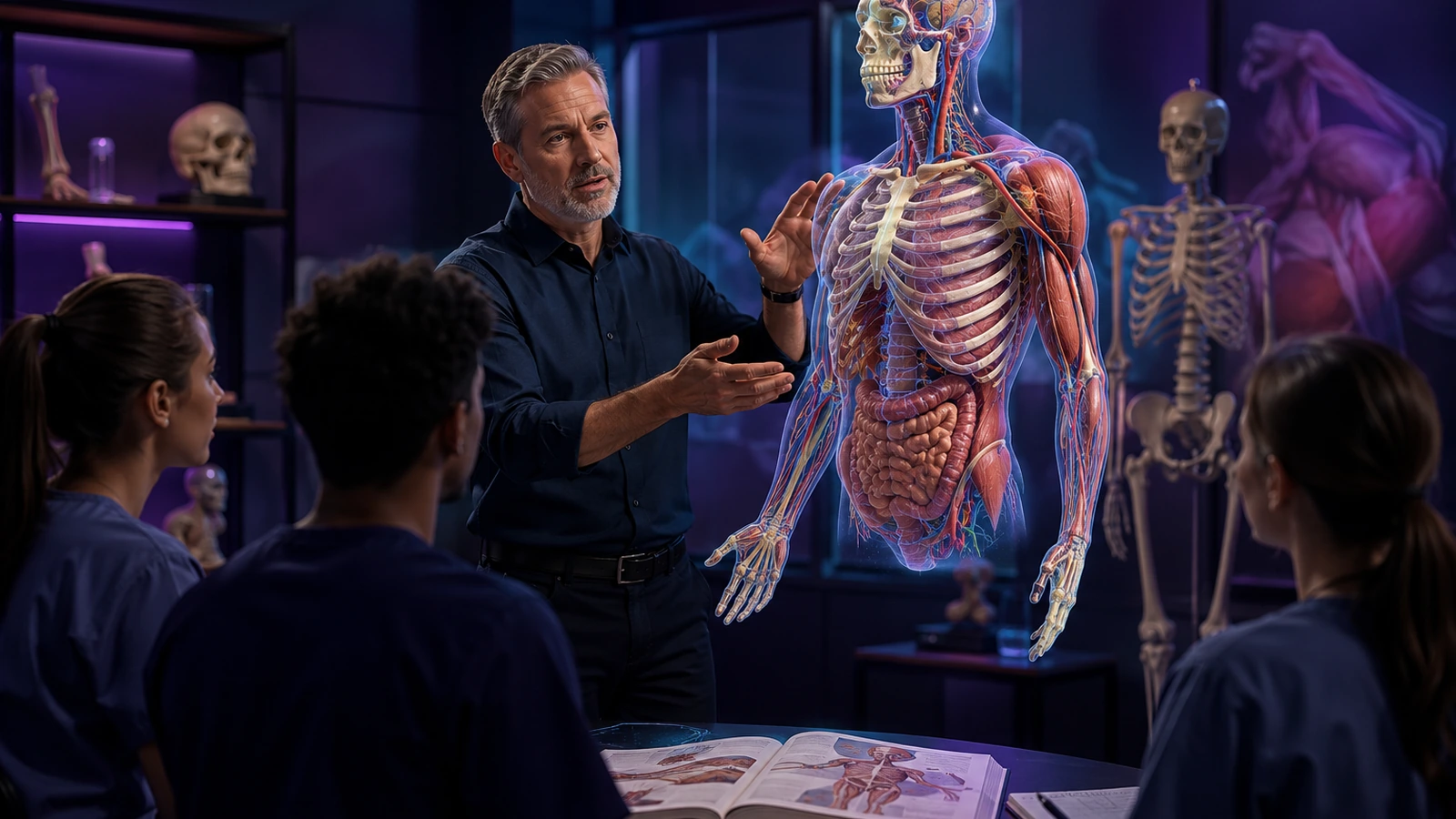
What Professor-Controlled AI Anatomy Teaching Should Look Like
A classroom framework for anatomy educators who want better student reasoning without outsourcing judgment.

How Medical Schools Should Pilot AI and VR Anatomy in 2026
A governance-first rollout plan for deans, curriculum leads, and digital learning teams.

How Simulation Centers Can Add a Repeatable Anatomy Layer Before High-Cost Scenarios
A partner-focused framework for inserting repeatable anatomy refresh before high-cost simulation scenarios.

How Anatomy Professors Can Use AI Without Encouraging Shortcut Learning
A faculty-first workflow for keeping anatomy AI useful without rewarding shallow fluency.

How Medical Schools Can Run an Anatomy AI Pilot Faculty Will Approve
A practical pilot design for anatomy AI that respects faculty control, rollout discipline, and evidence quality.

Why Trust-Layer Medical AI Is a Better Bet Than Generic Study Bots
A diligence framework for separating generic answer bots from governed medical education infrastructure.