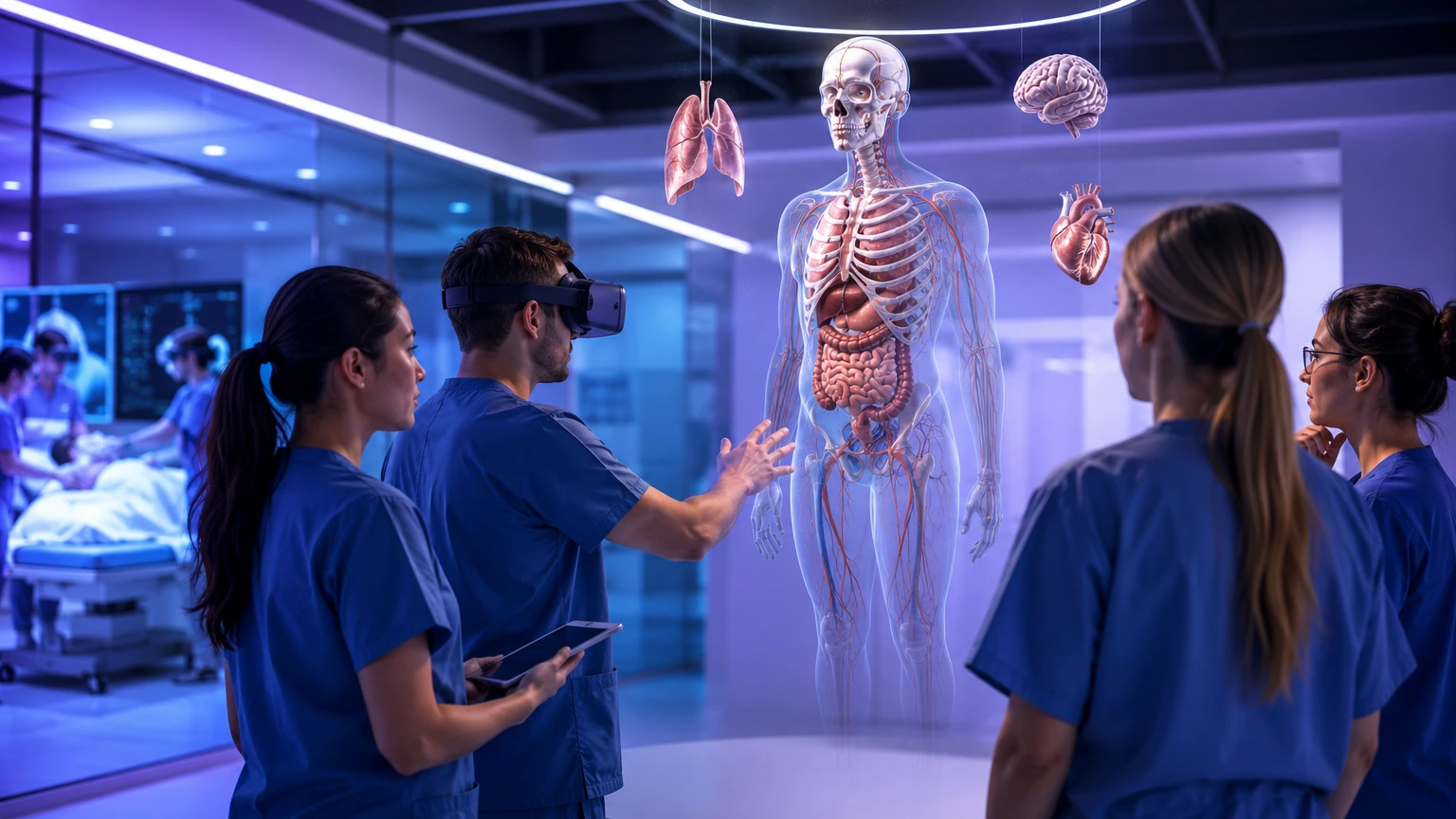
How Simulation Centers Can Add a Repeatable Anatomy Layer Before High-Cost Scenarios
Simulation centers are under pressure to do two things at once: increase realism and increase repeatability.
Those goals sound aligned, but they often collide in practice. The more expensive and faculty-intensive a scenario becomes, the harder it is to use that scenario for early-stage orientation, anatomy refresh, and low-stakes correction. Learners arrive underprepared, faculty time gets consumed by foundational review, and the center spends premium simulation minutes on problems that should have been addressed earlier.
That is why an anatomy layer before the main scenario is becoming strategically useful. Not because anatomy is new, but because repeatable, immersive anatomy refreshers can protect scarce scenario time for the work only the scenario can do.
The missed opportunity in many simulation programs
Many centers treat anatomy review as background material. Learners are expected to arrive prepared, revisit slides independently, or rely on whatever digital resources they already use. That approach works unevenly because it assumes foundational orientation is stable across the cohort.
Often it is not.
Some learners need a quick spatial reset before a procedure-focused session. Others remember the concept but not the regional relationships. Others know the anatomy in isolation but cannot re-enter it under pressure. When those gaps are left untreated, the expensive part of the simulation day ends up absorbing them.
The opportunity is not to replace simulation with VR anatomy. It is to create a preparatory layer that makes the simulation block more efficient and more educational.
Why this matters now
The evidence base around immersive anatomy and AI-supported medical education is growing, even if it still requires caution. Recent reviews in anatomy education show meaningful interest and promising outcome signals for VR and AR use, while broader medical-education reviews point to simulation, interactive learning, and guided digital support as practical application areas.
At the same time, implementation guidance from the AAMC and the wider medical-education community is shifting the conversation away from novelty and toward responsible deployment, faculty ownership, and measurable use cases.
For simulation centers, that means the timing is right to ask a sharper question: where can immersive anatomy create operational leverage before the high-cost scenario starts?
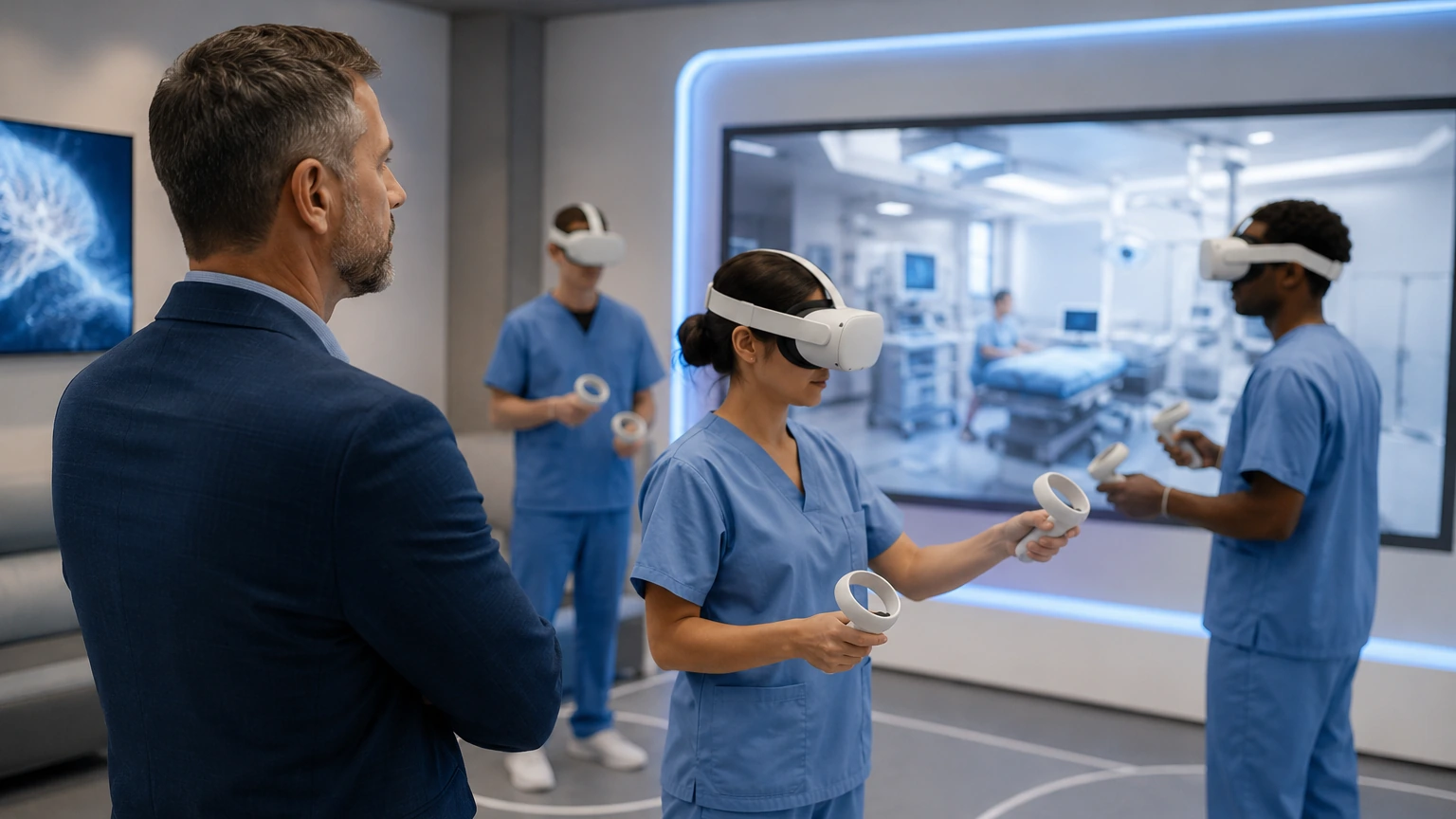
The anatomy layer should do one job well
A repeatable pre-scenario anatomy layer should not try to do everything. It should usually do one of three jobs.
Job 1: spatial orientation
Help learners re-enter a region or system before the scenario begins.
Job 2: structure-pathway review
Refresh the anatomical relationships that will matter in the scenario.
Job 3: guided verbalization
Prompt the learner to explain what they are seeing and why it matters before they are under full scenario pressure.
When the pre-brief layer is too broad, it becomes another training module competing for attention. When it is tight, it makes the later scenario better.
A practical implementation model
Simulation centers can test this without redesigning the whole program.
Before the session
Choose one scenario family with recurring foundational gaps, such as airway, neuro, trauma, or musculoskeletal procedural training.
During pre-brief
Run a short immersive anatomy reset focused on the specific region and relationships that the scenario depends on.
Before scenario launch
Ask learners to narrate the relevant structures and likely risk points.
After scenario debrief
Return briefly to the anatomy view to close the loop between the learner's actions and the underlying structure.
This creates a bridge between anatomy refresh and simulation performance without pretending they are the same educational job.
The hidden risk centers should avoid
The hidden risk is treating immersive anatomy as decorative orientation rather than as a purposeful training layer.
If the pre-scenario experience is generic, too long, or visually impressive without being instructionally targeted, faculty will see it as overhead. The center needs a repeatable reason for using it: reduced wasted scenario time, clearer learner orientation, or stronger debrief quality.
Another risk is asking faculty to manage a new tool without operational support. Good partner adoption usually depends on clear setup, defined module ownership, and a bounded use case.
Where MeduTechs can support this workflow
This is where a focused VR anatomy layer becomes practical.
The most relevant MeduTechs feature for this lane is VR Environments inside the VR App. The value is that learners can re-enter a spatial anatomy context before the live scenario begins, instead of trying to mentally assemble the region from flat review materials. Supporting features like systemic learning paths and the anatomy AI mentor are useful when they reinforce the pre-brief goals rather than distract from them.
For simulation programs that also need a faculty-and-curriculum lens, MeduTechs' faculty-focused anatomy teaching articles are the best contextual internal next read.
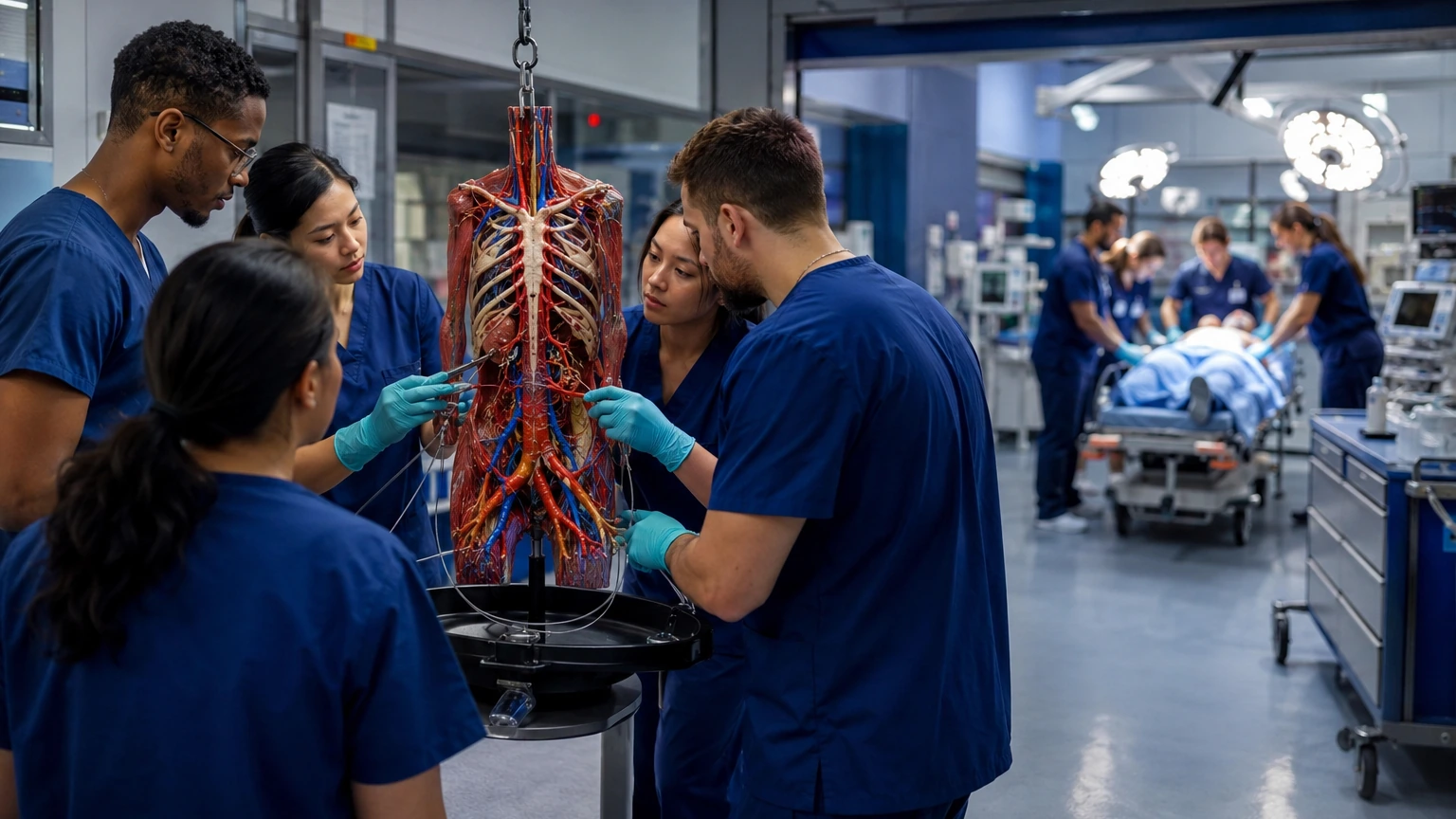
A pilot structure partners can actually run
If a hospital or simulation center wants to test this seriously, use a narrow three-part pilot.
1. choose one scenario line
Do not start across the whole center. Pick one recurring scenario family.
2. define one pre-brief anatomy objective
Examples: orient the brachial plexus before shoulder procedures, review ventricular outflow anatomy before cardiac simulation, or trace airway relationships before advanced airway drills.
3. measure one operational outcome
That could be faculty-reported readiness, reduced re-teaching during the scenario, or stronger learner explanation during debrief.
This keeps the pilot credible because it asks one honest question instead of making a broad innovation claim the center cannot prove yet.
One memorable insight for partner discussions
High-fidelity simulation is most valuable when it is not forced to do low-fidelity remediation at the same time.
That is the strategic reason an anatomy layer matters. It protects premium training time by moving foundational re-orientation into a format that is immersive, repeatable, and easier to stage.
Why faculty ownership matters here too
Simulation centers succeed when the anatomy layer is not "owned by the headset" but by the educator responsible for the scenario family. The faculty lead should be able to say which structures matter, what the learner must verbalize before entering the scenario, and what the pre-brief is intentionally not trying to solve.
What partners can prove without overstating
A strong partner pilot does not need to claim improved patient outcomes or broad competency gains immediately. It can responsibly show narrower wins: cleaner pre-brief orientation, less scenario time spent on basic re-teaching, more precise debrief language, or stronger learner confidence in the relevant region before entering the live case.
Those narrower wins are valuable because they are legible to both faculty and administrators. They translate the immersive layer into resource logic: less wasted scenario time, clearer use of expert instructors, and a stronger argument for repeating the format with the next cohort.
That is exactly the kind of evidence a strategic partner conversation needs before it expands into a broader training roadmap.
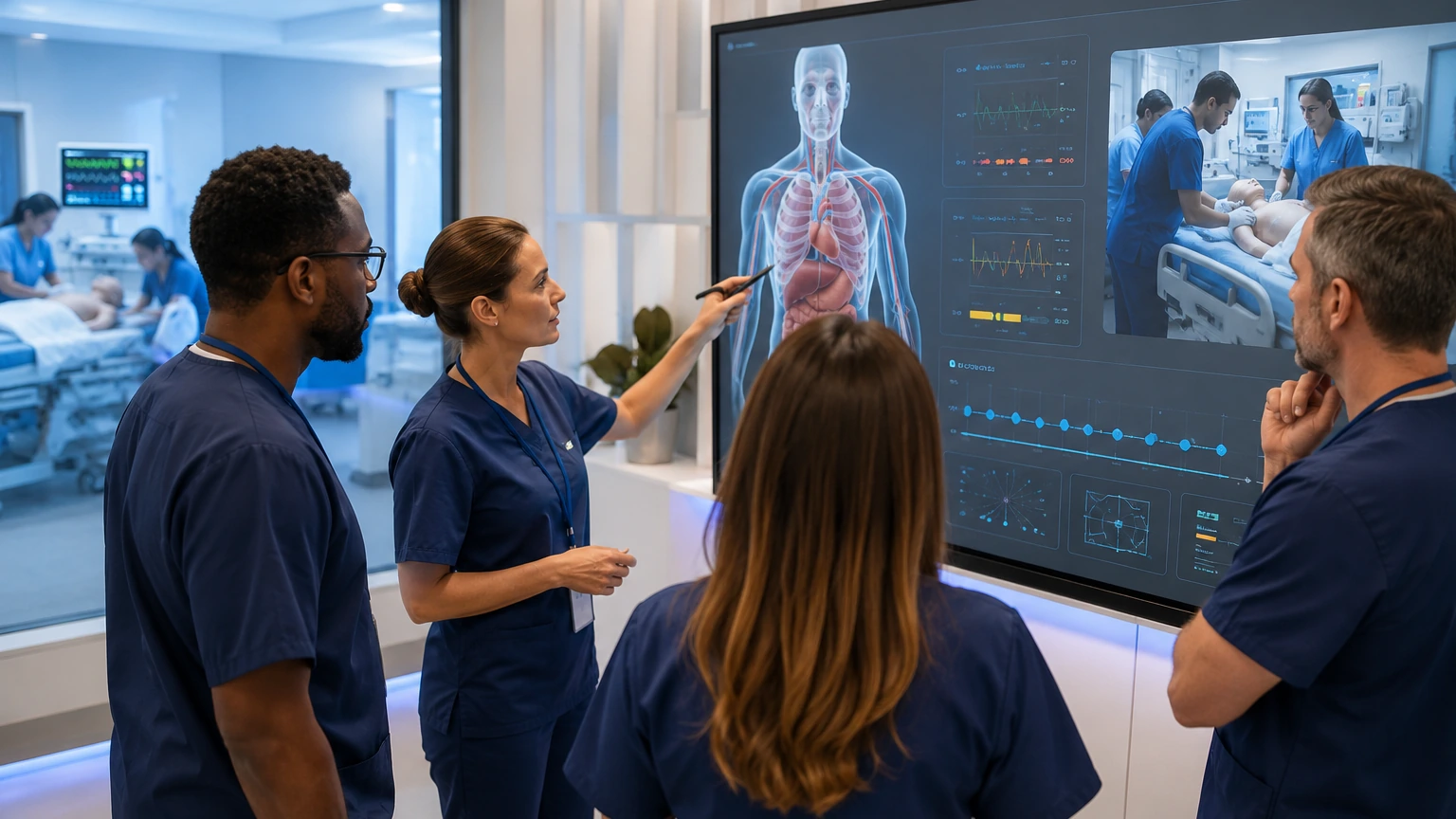
What to do next
Identify one scenario family where faculty repeatedly spend time re-explaining the same anatomy before the real learning objective begins. Build a short pre-brief anatomy layer around that pattern and test it for one cohort.
If the scenario starts cleaner and the debrief goes deeper, the partner case becomes much easier to justify.
That is also where the partnership story becomes stronger commercially. A simulation center that can show one repeatable pre-brief anatomy module, one faculty owner, and one observable training gain is in a better position to justify wider rollout than a center that simply says the experience felt innovative. Strategic partners need repeatable implementation evidence, not just enthusiasm.
That is the practical bridge between educational value and partner value: a workflow that is good enough to repeat, simple enough to own, and clear enough to defend in budget conversations.
When a partner can say, "This is the module, this is the owner, this is the gain, and this is how we repeat it," the conversation moves from innovation theater to real implementation.
That is especially important for hospitals and training centers that need cross-functional buy-in. Educational leaders, operations leads, and budget owners may each care about different signals, but all of them respond better to a repeatable module than to a vague promise about the future of immersive learning.
The partner advantage, then, is not just access to a tool. It is access to a training format that can be piloted carefully, evaluated honestly, and scaled only when the case has actually been made.
That measured path matters because strategic partnerships in medical training rarely fail from lack of excitement. They fail when the implementation story is still vague after the pilot. A repeatable anatomy layer helps fix that by giving the partner one specific, defensible unit of value to review.
That kind of clarity is what turns a promising demo into a partnership that can survive real operational scrutiny.
It is also what makes a second-phase rollout conversation feel warranted instead of premature. That is a much healthier foundation for a long-term partner relationship.
It also lowers the risk of scaling a concept before it has earned its place.
That alone can save a partner months of drift. And budget. Time.
Sources and further reading
- Efficacy of virtual reality and augmented reality in anatomy education: A systematic review and meta-analysis - Advances in anatomy education: the role of virtual anatomy tables, immersive techniques, and 3D printing - Artificial Intelligence in Medical Education: a Scoping Review of the Evidence for Efficacy and Future Directions - Recommendations and Action Steps to Deploy AI in Medical Education: A Practical Guide
Continue reading
Frequently asked questions
References
- Efficacy of virtual reality and augmented reality in anatomy education: A systematic review and meta-analysisTrust A
- Advances in anatomy education: the role of virtual anatomy tables, immersive techniques, and 3D printing - a systematic reviewTrust A
- Artificial Intelligence in Medical Education: a Scoping Review of the Evidence for Efficacy and Future DirectionsTrust A
- Recommendations and Action Steps to Deploy AI in Medical Education: A Practical GuideTrust A